Africa is often tagged as the most susceptible continent to climate change; this is despite contributing less than 4% to the global greenhouse gas emissions. Yet, we bear the brunt of the climate problem; severe floods, droughts, excessive heat, diminishing water bodies, and failing crops have made this crisis increasingly obvious. And while a lot of attention rightly goes to the impact, the real root of the problem is far less discussed.
Africa lacks the environmental data needed to fight the climate crisis.
The Bigger Crisis: Africa’s Climate Data Gap
Most of the environmental data available for the region are satellite-based, which sounds great in theory. But in reality, the dataset is often imprecise, coarse, complicated, or unavailable to those who need it the most. The best approach is to Integrate satellite dataset with reliable, ground-based observations. But here lies the issue.
According to the World Meteorological Organization (WMO), Africa only has one-eighth of the weather stations it needs. Many of these are outdated or non-functional. Based on global standards, we should have at least 3,000 to 5,000 ground stations across the continent, especially denser networks in mountainous or vulnerable regions. In reality, we are nowhere near that number.
As Ibrahim Mo, founder of IMF, once said:
“Without data, we are driving blind; policies are misdirected, and progress on the road to development is stunted. We must act urgently to close the data gap in Africa if we genuinely want to leave no one behind.”
We couldn’t agree more.
The Big Question: What if we built Africa’s most reliable Climate Data Network?
That question was the spark. As the team at Trappist Labs, we asked ourselves: What if we created a climate data network that worked not just for scientists, but for policymakers, students, farmers, and everyday people trying to adapt?
We answered yes. Because we believed we could, and so we started building.
For many of us, it was an emotional response. Because we are not observing from a distance, we are living through the realities of the climate crisis in our communities, and that proximity sparked a deeper commitment to build the solutions ourselves.
We made a bold decision to build our own weather stations.
By November 2023, we had one clear goal to provide the data infrastructure that powers Africa’s climate resilience. Our idea was to create a dense, robust network of weather and air quality stations and deploy them across Africa. So we got to work: researching sensor systems, studying environmental data standards, identifying coverage gaps across the continent, and designing hardware that could work for the African environment. Not just in theory, but in reality.
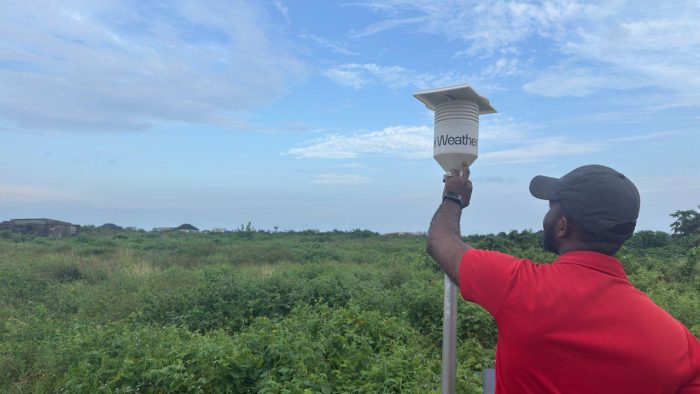
Two months later, in January 2024, we had a prototype a working weather station that measures temperature, humidity, wind speed and direction, pressure, rainfall, and carbon dioxide (CO2),. It was our first proof of concept and a signal that we were on the right path.
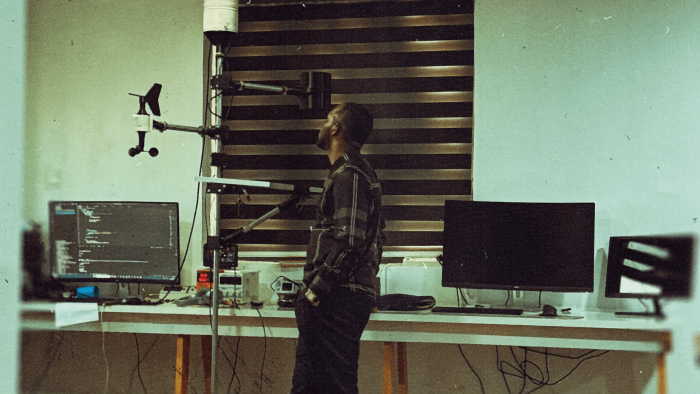
From there, we refined our designs, improved the sensors, upgraded our data architecture, and tested everything in real world conditions. Each update made our stations more robust, more accurate, and more ready for Africa.
More Than Just Hardware: We Built the Platforms Too
To further achieve our goal of making climate data more accessible across Africa, we developed a Climate SaaS platform offering a sandbox API that gives users seamless access to historical climate data across the continent. Now researchers, developers, governments, and innovators can tap into decades of archived climate records and build the solutions Africa needs, faster.
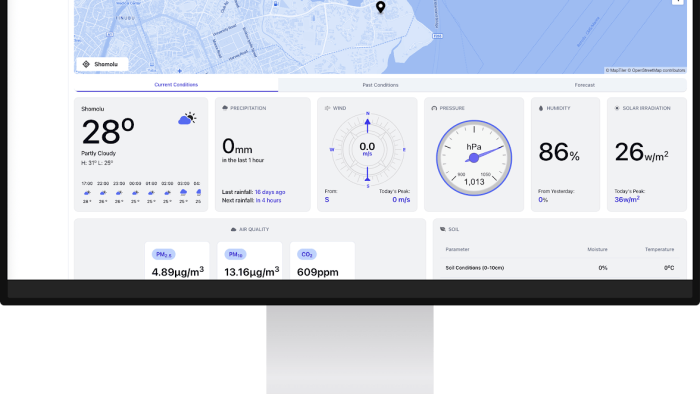
Additionally, we launched an AI-driven environmental intelligence platform that combines satellite data with ground-truth data from our own in situ stations to give hyperlocal, real-time environmental data.
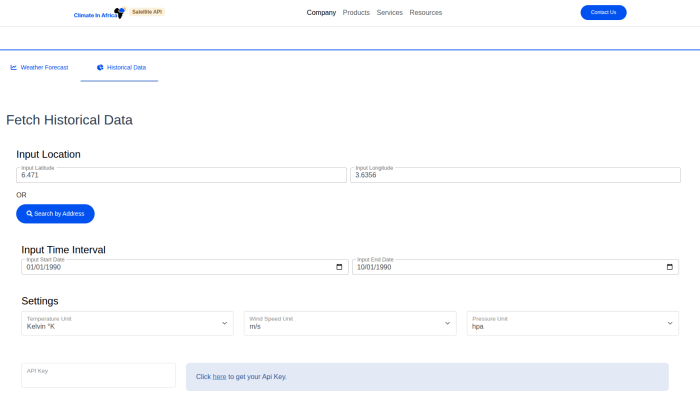
The Power Behind It All: Our IoT-Enabled Climate Intelligence Network
At the heart of our system is an IoT Application Enablement Platform designed for hyperlocal climate intelligence. It includes:
- Real-time monitoring
- Multi-user administration
- Customised dashboards
- Reliable data visualisation
- Personalised storage options
The user-friendly interface allows you to view, personalise, and manage multiple stations.
Building something this unique wasn’t without its own hurdles. From sourcing reliable hardware components to selecting the most relevant sensors, every step came with its own set of challenges. At several points, we had to rethink and completely redesign our system architecture to optimise the performance of our weather stations.
It wasn’t easy, but we didn’t stop.
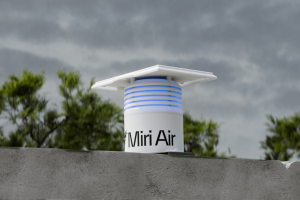
After months of prototyping and rigorous stress-testing, we developed Modular In-situ Reporting Instruments (MIRI) packed with sensors to monitor a wide range of environmental variables, including PM2.5, PM10, carbon monoxide (CO), carbon dioxide (CO₂), nitrogen dioxide (NO₂), volatile organic compounds (VOCs), sulphur dioxide (SO₂), methane (CH₄), noise levels, temperature, humidity, formaldehyde, and atmospheric pressure. The stations provide a comprehensive view of both air quality and meteorological conditions in real time.
Validation, Calibration, and Global Standards
We’ve taken great care to ensure that every component in our stations is properly validated and calibrated, with reference to regional calibration centres and in alignment with WMO standards for weather stations. Every component has undergone rigorous testing to guarantee accuracy and reliability in diverse African environments.
Our commitment to quality doesn’t end at deployment. Our engineers are continuously monitoring system performance, resolving bugs promptly, and maintaining a seamless flow of operations. From firmware updates to backend optimisation, we are constantly improving. Because we know that providing high-quality data is the actual solution to the problem.
We built in silence but with our eyes open
We were intentional about finding the right organisations that understood the need for accurate environmental data and the power it offers.
In January 2025, everything aligned. We secured our first major partnership with the Lagos State Environmental Protection Agency (LASEPA). They needed a better system for environmental monitoring and tracking compliance, and we provided custom-built Miri Air stations, tailored specifically for their operational needs. That partnership marked more than just a milestone. It was proof that what we were building mattered.
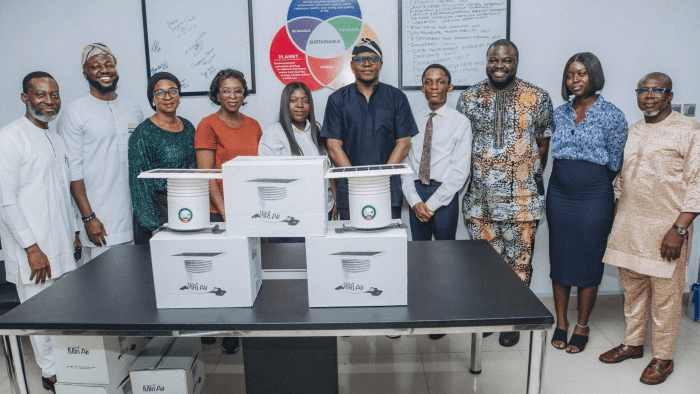
Project 10k Devices
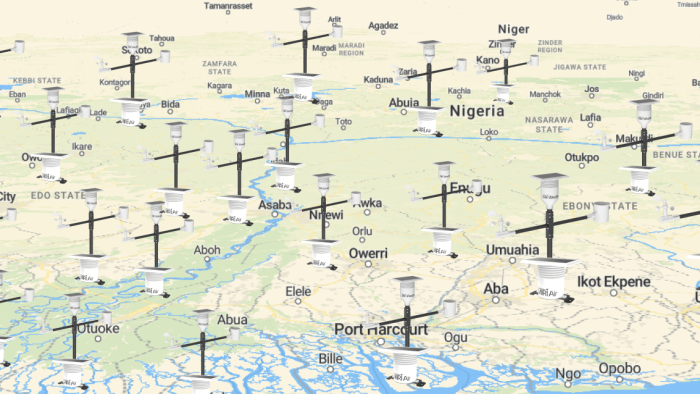
And it only got better from there. What started as an answer to a question has now evolved into an initiative to deploy 10,000 stations in the coming years. So far, we’ve installed about 30 devices in the field. We started in Nigeria, but now we have extended our poles beyond the borders of Nigeria into Western and Southern Africa.
And we’re just getting started.
We are building a name you can trust
At Climate in Africa, we are redefining how the continent accesses and uses climate data. Our work is deeply rooted in the understanding of the needs of the African region, the technical and scientific knowledge. We are not just selling weather stations, we envision a continent where no decision is made in the dark.
Our team comprises brilliant and well-trained engineers, climate scientists, developers, and designers who understand not only the tasks but also the impact on the African community.
More interestingly, you should take a look at our board of directors. They are individuals who have built some of the continent’s most successful and innovative ventures, like Andela, Flutterwave and Space in Africa. Their track record speaks volumes. They’ve launched space tech from African minds, scaled global tech talent platforms, and built ecosystems where others saw gaps. Climate in Africa is no different; these individuals are helping us build infrastructures that will transform how Africa tackles climate change.
Our mission is rooted in urgency and driven by impact. We are actively contributing to SDG 13: Climate Action by providing the tools, data, and infrastructure Africa needs to understand and respond to the climate crisis. We are responding to a crisis that has long gone unanswered. We are here to fill the silence where data should have spoken.
If you believe in our vision for Africa, come along with us.