Each December, as the calendar turns toward the year’s end, a predictable yet formidable atmospheric phenomenon descends upon West Africa: the Harmattan. This is not merely a seasonal shift in weather, but a large-scale natural event that dramatically degrades air quality across the region. While urban pollution from industry, vehicles, and waste burning presents a constant challenge, the Harmattan introduces an overwhelming surge of mineral dust from the Sahara, compounding existing air quality issues and creating a uniquely hazardous environmental period.
Understanding this phenomenon is essential, not only for contextualizing December’s hazy skies but for safeguarding public health during a time when the air itself becomes a vehicle for far-reaching environmental stress.
Startling Statistics:
During peak Harmattan periods, air quality measurements in affected regions often show:
PM10 concentrations 10-20 times higher than WHO safe limits
PM2.5 levels 5-15 times higher than recommended guidelines
Visibility reduced by 70-90% on the worst days
Air Quality Index (AQI) readings consistently in “Unhealthy” to “Hazardous” ranges
What is Harmattan?

Harmattan originates from the expansive, arid basins of the Sahara Desert. Key source regions for its mineral dust include the Bodélé Depression in Chad, often referred to as the world’s largest single source of atmospheric dust.
Other major sources include ergs and dry lake beds, such as those near Bilma in Niger and the Faya-Largeau area in Chad.
During the winter months in the Northern Hemisphere (typically November to March), high-pressure systems tend to build over these regions. This generates a powerful, dry northeasterly wind that lifts and transports immense quantities of fine dust and sand particles southwestward across the Sahel and West Africa, covering distances of hundreds to thousands of kilometres.

Key Characteristics of Harmattan:
Extremely low humidity (often below 20%)
Significant temperature drops, especially at night
Reduced visibility due to dust haze (sometimes to less than 1 kilometer)
Distinct reddish-orange haze in the atmosphere
Persistent dry, dusty conditions lasting days to weeks
The Science: How Harmattan Directly Worsens Air Quality!

The primary air quality impact comes from particulate matter (PM); tiny solid or liquid particles suspended in the air. The Harmattan specifically affects two critical categories:
1. PM10 (Particulate Matter 10 micrometers and smaller)
These are the visible dust particles that coat everything in a fine layer of red dust. They originate directly from the Sahara’s surface and include:
Mineral dust
Sand particles
Soil components
Biogenic materials (pollen, mold spores)
2. PM2.5 (Particulate Matter 2.5 micrometers and smaller)
These invisible particles are more dangerous as they can penetrate deep into lungs and even enter the bloodstream. During Harmattan, these include:
Finer mineral dust
Combustion particles that bind to dust
Secondary pollutants formed from dust-chemical interactions
Biological contaminants transported with the dust
The Double Burden: Harmattan Meets Existing Pollution
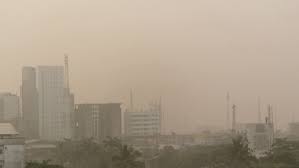
The Harmattan creates what environmental scientists call a “pollution double burden”:
1. Natural Pollution from the Desert:
Pure mineral dust (primary impact)
Transported microorganisms and allergens
Reduced atmospheric cleansing capacity
2. Interaction with Human-Made Pollution:
When Harmattan dust mixes with urban/industrial pollution, dangerous synergies occur:
Dust particles act as carriers for toxic chemicals
Industrial emissions bind to dust surfaces
Vehicular exhaust combines with dust particles
Household pollution (from cooking/heating) becomes trapped in stagnant, dusty air
This combination creates a toxic atmospheric cocktail that’s more dangerous than either pollution source alone.
Health Impacts: When Dust Becomes Dangerous

The health consequences of Harmattan-induced poor air quality are both immediate and potentially long-term:
Immediate Health Effects:
Respiratory Issues: Coughing, wheezing, asthma attacks, bronchitis
Eye Problems: Conjunctivitis (“Apollo”), irritation, dryness
Skin Conditions: Dryness, cracking, eczema flare-ups
Allergic Reactions: Hay fever symptoms, sinusitis
General Discomfort: Headaches, fatigue, nasal congestion
Vulnerable Populations:
Certain groups face higher risks during Harmattan:
Children (developing respiratory systems)
The Elderly (weakened immune responses)
People with pre-existing conditions (asthma, COPD, heart disease)
Outdoor workers (extended exposure)
Pregnant women (fetal development concerns)
Long-Term Health Concerns:
Chronic respiratory diseases
Cardiovascular problems
Reduced lung function in children
Potential links to neurological issues (emerging research)
Conclusion: Living with the Seasonal Reality
The Harmattan is a natural phenomenon that has shaped West African climates and cultures for millennia. While we cannot prevent the winds from blowing, we can significantly reduce their harmful impacts through awareness, preparation, and collective action.
This December, as the familiar haze descends, remember that knowledge is your first line of defense. Monitor air quality when possible, take appropriate precautions, and advocate for policies that protect community health year-round but especially during the challenging Harmattan months.
The dust will eventually settle, but our commitment to breathing cleaner air should remain constant.